.jpg?width=88&height=88&name=BennyJ%20(2).jpg)
Author
Ben Jastatt
Sr. Director, Marketing

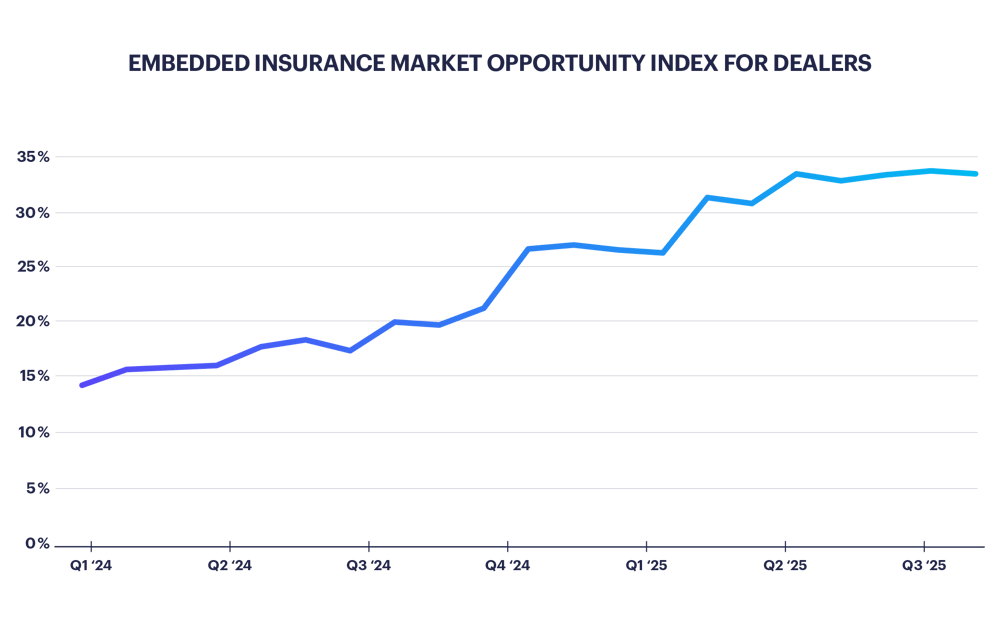
The embedded auto insurance market continued its upward trajectory in Q3 2025, reinforcing the steady recovery that began last year and showing signs of long-term durability. What initially looked like a fragile rebound has now matured into a consistent growth trend, with adoption and performance holding strong quarter over quarter.
For dealers actively using embedded insurance, the benefits are becoming increasingly predictable. Higher F&I profit, fewer stalled deals, and a smoother customer experience are no longer isolated outcomes; they’re repeatable results. Embedded insurance has evolved from a defensive response to rising premiums into a reliable lever dealers can pull to protect margins and improve close rates.
Just as importantly, embedded insurance is proving to be scalable. As more dealers integrate insurance into the deal flow, it’s becoming a durable part of the modern retail experience, one that supports customer satisfaction while giving dealers a meaningful advantage in a highly competitive market.
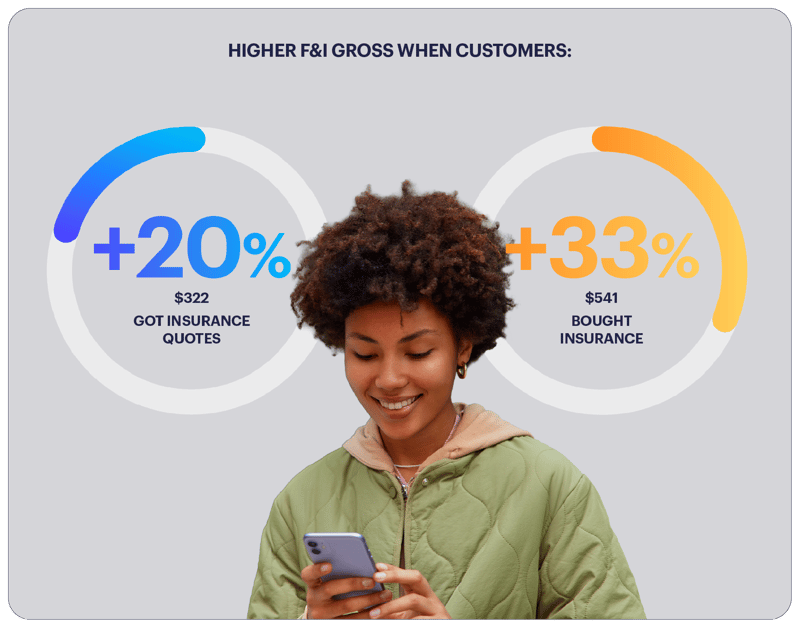
Dealers who introduced insurance quotes during the purchase journey saw a 20% lift in F&I gross in Q3 2025, adding an average of $322 more per transaction compared to deals with no insurance engagement. Simply mentioning insurance options proved meaningful in driving incremental profit.
When customers went a step further and purchased an insurance policy, the impact was significantly greater. These deals delivered a 33% increase in F&I gross, or $541 more per transaction, reinforcing insurance engagement as one of the most effective levers dealers have to increase profitability without adding friction to the deal.
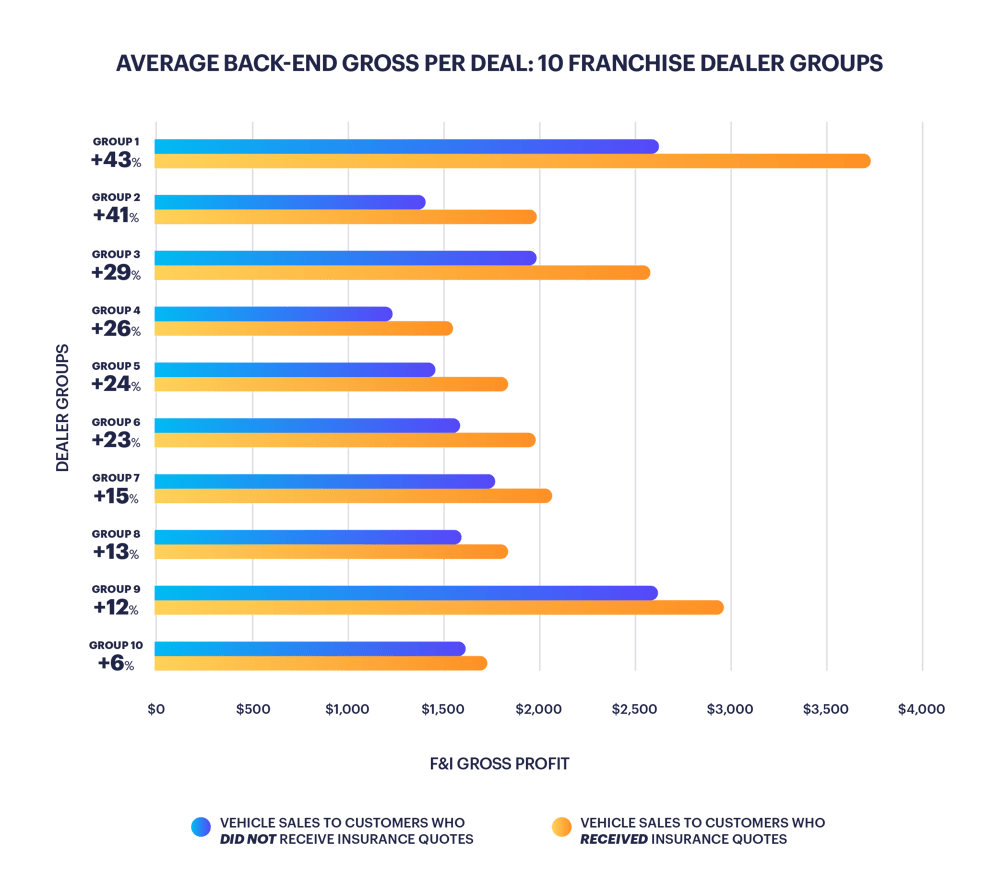
For the seventh consecutive quarter, the most engaged dealers in the Polly network continued to outperform on back-end gross when insurance was part of the deal. Across the top-performing group, insurance engagement consistently delivered higher F&I results, ranging from modest lifts in some rooftops to substantial gains in others. In several cases, lifts exceeded 40%, underscoring how sustained insurance adoption compounds over time rather than producing one-off gains.
This quarter’s data builds on what we observed in Q2. The more consistently dealers engage customers with insurance, particularly by introducing quotes earlier and more often, the stronger the financial results. Embedded insurance is no longer an experimental tactic used by a handful of early adopters; it’s a proven, scalable strategy that top dealers are using to reliably raise their F&I ceiling.
The retail auto insurance market continued its steady return to normal throughout 2025. Conditions that once made it difficult for buyers to secure coverage—limited insurance company appetite, single-quote outcomes, and delivery delays—have continued to ease as insurer participation and competitiveness improve.
From July through November 2025, just 3.1% of buyers struggled to obtain insurance during the car-buying process, down from 4% earlier in the year and dramatically lower than peak disruption levels. At the same time, access to choice has returned: three out of four buyers are now receiving multiple insurance quotes, a clear signal that underwriting capacity and insurer appetite are firmly back in the market.
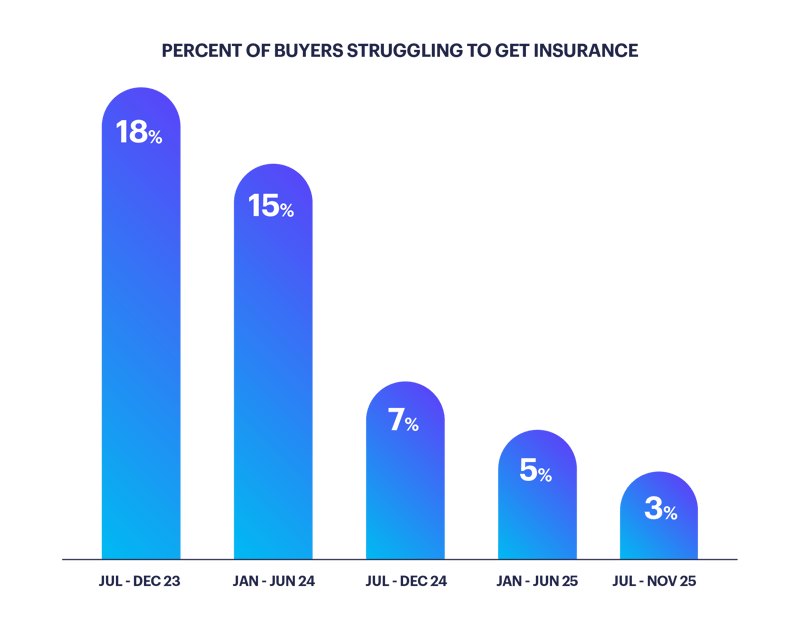
Percent of buyers who were either uninsurable, had high insurance (more than 2X monthly average), or faced conditions where insurance companies pulled back from taking on new customers in their states.
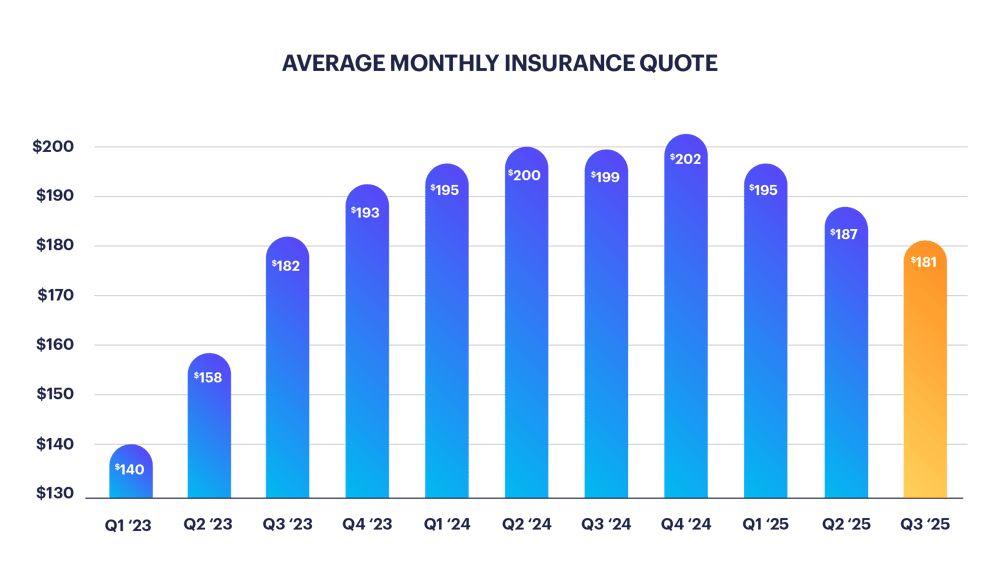
Auto insurance quotes continued to decline in Q3 2025, extending the easing trend that began earlier this year. The median monthly insurance quote for car buyers fell to $181, down from $187 in Q2 and well below the late-2024 peak.
This continued decline is giving buyers hope at a time when affordability remains central to the car-buying decision. For dealers, lower insurance costs reduce friction in the finance office, help stabilize total cost of ownership, and make it easier to keep deals moving forward.
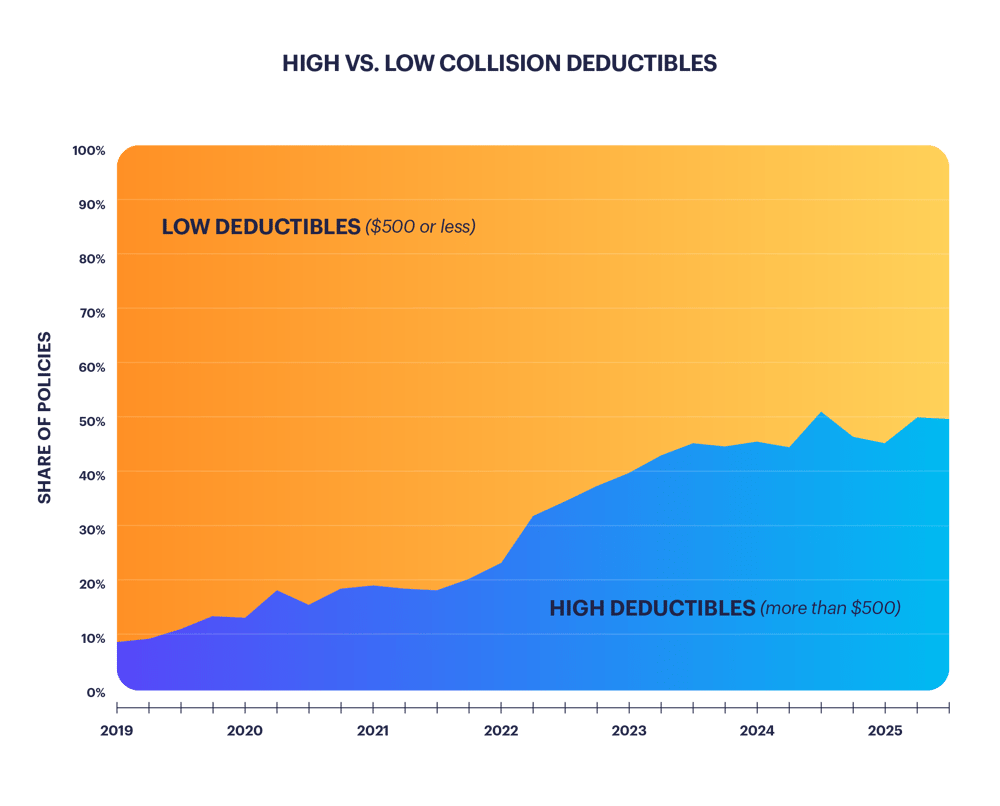
However, more shoppers are still opting for higher deductibles to manage monthly costs, trading short-term savings for greater out-of-pocket risk. While rates are easing, affordability pressures haven’t disappeared; they’ve evolved, making insurance an increasingly important part of the deal conversation.
In Q3 2025, half of buyers who purchased insurance at the dealership selected a high collision deductible, up from less than 10% before the pandemic. Faced with sustained pricing pressure, consumers are increasingly trading higher out-of-pocket risk for lower monthly payments.
Raising a collision deductible from $500 to $1,000 can often reduce monthly premiums by around 10%, making deductibles one of the most immediate levers buyers can pull. While this helps keep deals affordable, it also shifts more financial risk to the consumer.
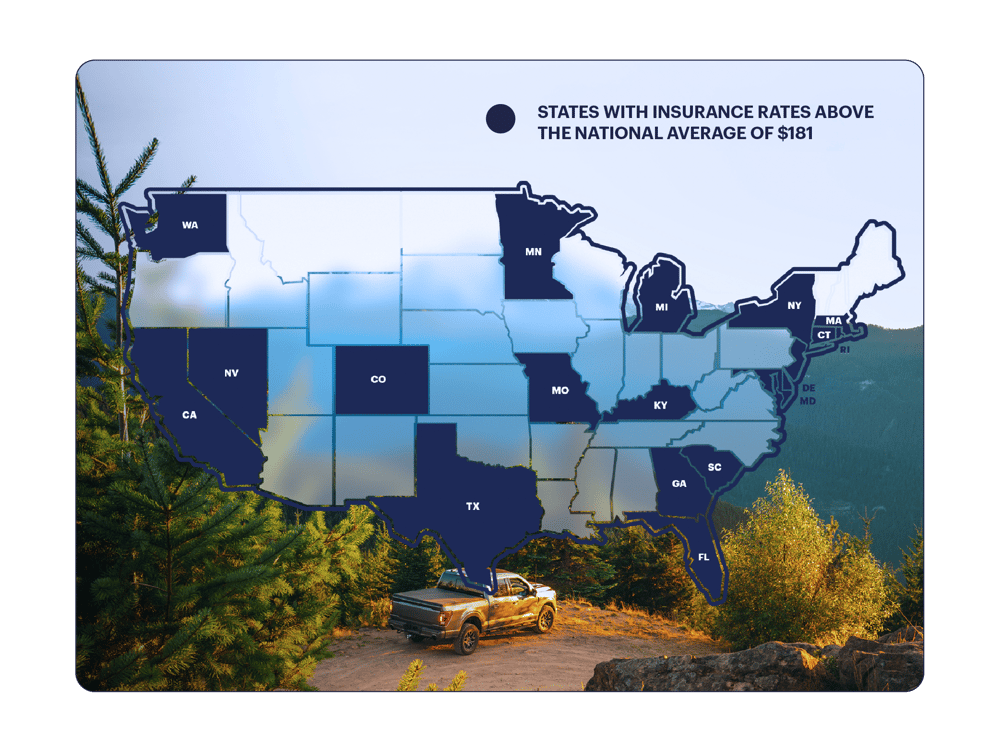
While national insurance rates eased to a median of $181 per month in Q3, affordability pressures remain acute in many parts of the country. In several high-cost states, insurance premiums continue to sit well above the national average, creating real obstacles for buyers during the car-buying process.
Residents of Nevada ($297), Georgia ($282), New York ($279), and Delaware ($246) faced the highest average quotes this quarter. States such as California ($245) and New Jersey ($236) also remained persistently expensive, reinforcing that insurance affordability is still heavily influenced by geography.
Elevated insurance premiums can add hundreds of dollars to a buyer’s monthly cost calculation, increasing the risk of sticker shock, delayed deliveries, or stalled deals.